
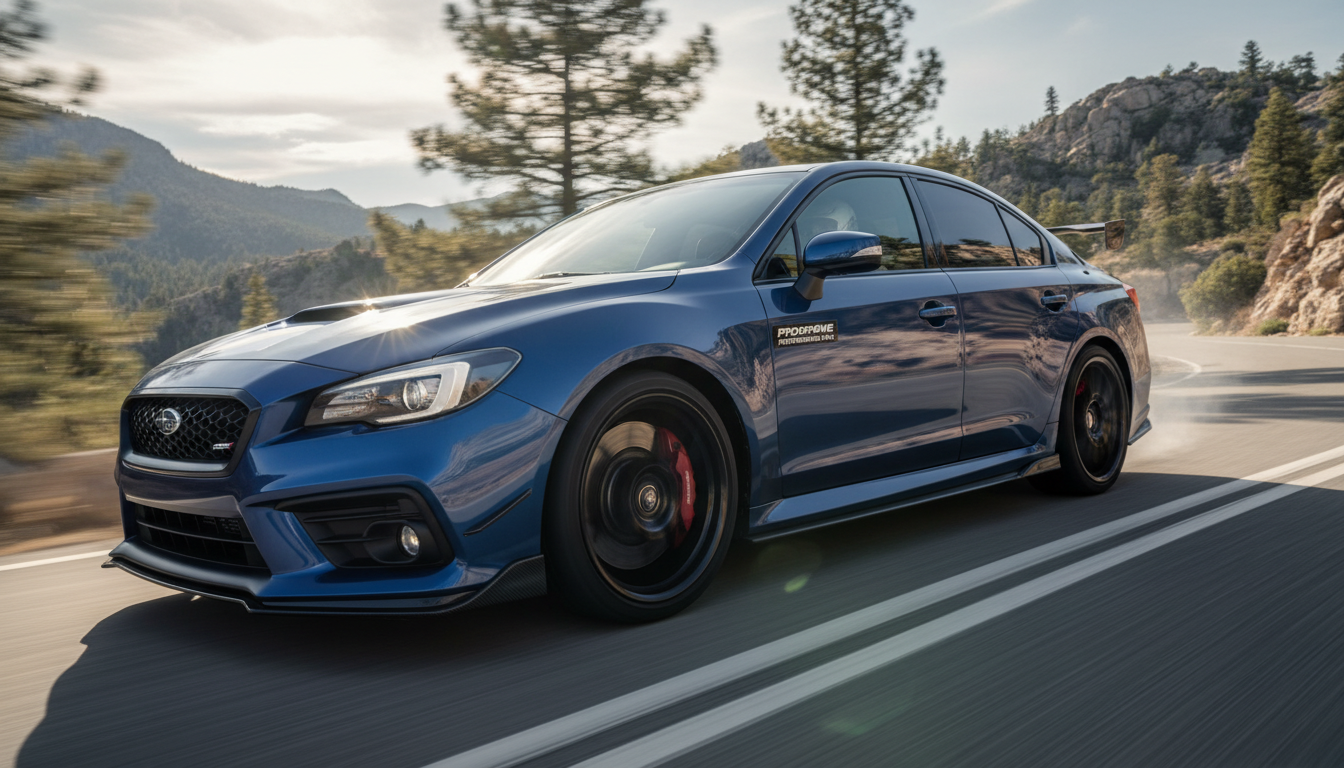
For enthusiasts of the Subaru Impreza WRX and STI, the name “Prodrive” holds a reverence usually reserved for religious icons. It is a name synonymous with rallying glory, engineering excellence, and the raw, unadulterated spirit of driving. At the intersection of this legendary motorsport heritage and the road-going consumer market lies one of the most celebrated upgrades in automotive history: the Prodrive Performance Pack (PPP).
While the Subaru Impreza WRX left the factory as a formidable machine, it was the addition of the PPP that unlocked its true character. This article explores the history, the engineering, the impact, and the enduring legacy of the Prodrive Performance Pack, examining why, decades later, those three letters—PPP—still add a premium to the price tag of used Subarus.
The Genesis: From Rally Stages to Road Cars
To understand the PPP, one must first understand the relationship between Subaru and Prodrive. Founded in 1984 by David Richards, Prodrive is a British motorsport and advanced engineering group based in Banbury, Oxfordshire. Their partnership with Subaru began in 1990, a collaboration that would change the face of the World Rally Championship (WRC).
With Colin McRae, Richard Burns, and Petter Solberg behind the wheel, the blue and gold Subarus became icons of the 90s and early 2000s. The marketing slogan “Win on Sunday, Sell on Monday” was never more applicable. However, there was often a gap between the monstrous WRC cars tearing through the forests of Finland and the showroom models available to the public. While the WRX was fast, strict emissions regulations and noise limits often meant the engines were strangled, unable to breathe as freely as their design intended.
The Prodrive Performance Pack was the solution. It was a factory-approved, warranty-friendly upgrade designed to bridge the gap between the showroom and the rally stage. Unlike aftermarket tuning, which often voided warranties and compromised reliability, the PPP was developed in collaboration with Subaru UK. It offered buyers a way to safely extract more power, torque, and aural drama from their vehicles without the fear of blowing an engine or losing dealer support.
Engineering the Upgrade: What is in the Pack?
The genius of the PPP lay not in radical mechanical surgery, but in optimizing the existing hardware. The exact components varied slightly depending on the model year (Classic, Bugeye, Blobeye, Hawkeye, and Hatchback) and whether it was applied to a WRX or an STI, but the core philosophy remained consistent: improve airflow and optimize engine management.
1. The ECU Remap
The heart of the PPP was the Engine Control Unit (ECU) upgrade. Prodrive engineers, utilizing their vast data from rallying, reprogrammed the engine’s brain. They tweaked the fuel maps, ignition timing, and boost pressure.
- Boost Pressure: The standard boost pressure was often increased, allowing the turbocharger to force more air into the engine.
- Throttle Response: The mapping was adjusted to provide sharper throttle response, reducing the infamous “turbo lag” and making the car feel more urgent in the mid-range.
2. The Exhaust System
To complement the increased boost, the engine needed to exhale more efficiently. The PPP typically included a high-flow stainless steel exhaust system.
- Silencer/Muffler: The most visible change was often a polished tailpipe with the Prodrive logo etched onto it.
- Catalytic Converters: In many iterations, the pack replaced the restrictive factory catalytic converters with high-flow sports cats or removed a section of the piping that contained a pre-cat. This significantly reduced backpressure, allowing the turbo to spool up faster.
- The Sound: Crucially, this exhaust unlocked the signature “Subaru Rumble.” While stock WRXs had a distinct burble, the PPP amplified it into a deep, aggressive growl that became the soundtrack of car meets across the world.
3. Intercooler Piping (Silicon Hoses)
On many models, specifically the STI versions, the pack included distinctive silicone intercooler hoses (often blue or red) branded with Prodrive. These were more rigid and durable than the standard rubber hoses, preventing deformation under high boost pressure and ensuring consistent airflow to the intercooler.
4. Fuel Pump (Specific Models)
In certain high-output iterations, an uprated fuel pump was included to ensure the engine never starved for fuel during sustained high-RPM driving.
The Numbers: Performance Gains
On paper, the gains provided by the PPP might seem modest by modern standards, where electric vehicles offer instant torque. However, in the context of the driving experience, the transformation was profound.
For a typical “Blobeye” WRX (circa 2003-2005), the standard output was roughly 225 bhp. The PPP bumped this to around 265 bhp. Torque figures saw a similar, if not more impressive, jump, often increasing by 15-20%. This resulted in a 0-60 mph time that dropped from roughly 5.6 seconds to under 5.0 seconds—supercar territory for the early 2000s.
For the STI models, which started with around 265 bhp or 276 bhp (depending on the market), the PPP could push output past the 300 bhp barrier (specifically 305 PS or roughly 300 bhp).
But numbers only tell half the story. The delivery of power was the real achievement. A standard WRX could feel slightly lethargic below 3,000 RPM before the turbo woke up. A PPP-equipped car felt more muscular throughout the rev range. The mid-range torque—the power you use for overtaking on a highway or powering out of a corner—was vastly improved. It made the car feel lighter and more responsive, turning a fast saloon into a genuine B-road weapon.
The “Factory Approved” Advantage
The most critical aspect of the Prodrive Performance Pack was its official status. In the UK, which was the primary market for these upgrades, the PPP could be installed by a Subaru dealership before the customer even took delivery of the new car.
This meant:
- Warranty Preservation: The standard 3-year/60,000-mile manufacturer warranty remained fully intact.
- Insurance Friendly: Because it was an official manufacturer upgrade, it was far easier to insure than a car modified with mismatched aftermarket parts.
- Resale Value: A car with a factory-fitted PPP generally held its value better than a stock car, and significantly better than a car modified by “Dave in a shed.”
This legitimacy enticed a demographic of buyers who wanted performance but were risk-averse regarding reliability. It allowed professionals to drive a rally-bred monster to work without worrying about it breaking down, and then unleash it on the weekends.
Evolution of the Pack
The PPP evolved alongside the Impreza generations.
- The Classic (GC8): The early packs were rawer. The exhaust notes were louder, and the ECU tuning was aggressive. This era established the reputation.
- The New Age (Bugeye/Blobeye/Hawkeye): This was the golden era of the PPP. As the WRX became slightly heavier and more refined, the PPP became essential to restoring the car’s edge. The “Hawkeye” 2.5L engines particularly benefited from the pack, as the increased displacement combined with the Prodrive tuning created a torque monster.
- The Hatchback: When Subaru moved to the hatchback design in 2008, Prodrive continued to support the brand. However, the tuning landscape was changing. Emissions regulations were tightening, making it harder to extract easy power gains legally. The 330S and other special editions often incorporated PPP-style upgrades as standard or options.
Legacy and Collectibility
Today, the Prodrive Performance Pack is a highly sought-after feature on the used market. When browsing classifieds for a WRX or STI, listings that mention “PPP” or “Prodrive Pack” command immediate attention.
Identifying a Genuine PPP
Because the components were simple bolt-ons, counterfeiting or “inspired by” modifications are common. A genuine PPP car should have:
- The Certificate: The original owner would have received a specific certificate of installation from Prodrive/Subaru.
- ECU Sticker: The ECU often has a holographic Prodrive sticker indicating it has been remapped.
- Exhaust Markings: The tailpipe should feature the etched Prodrive logo.
- Silicone Hoses: Look for the branded Y-pipe under the intercooler (on applicable models).
The “Prodrive Tax”
There is a debate in the community about the value of the PPP today. Modern aftermarket tuning has advanced significantly. A contemporary “Stage 1” tune from a reputable specialist can often yield more power and better fuel economy than the old PPP map, and modern exhaust systems can be lighter and flow better.
However, purists argue that the PPP offers provenance. It is period-correct tuning. It represents the car as the engineers at Prodrive—the people who built McRae’s winning car—intended it to be driven. In a world of over-modified, lowered, and excessively loud Subarus, a clean example with an original Prodrive Performance Pack stands out as a mark of sophistication and heritage.
Beyond the Engine: Handling Packs
While the “Performance Pack” usually referred to the engine upgrade, Prodrive didn’t stop there. They also offered handling upgrades, often sold separately or as part of special editions like the WR1 or the RB320. These included:
- Springs: Lowering springs that reduced body roll and improved the stance without ruining the ride quality (a notorious difficulty with the Impreza chassis).
- Wheels: Iconic alloy wheels, such as the P1 or GT1 wheels, which were lighter and stronger than stock, reducing unsprung mass.
- Brakes: Upgraded Alcon braking systems for those who intended to take their cars to the track.
While technically separate from the standard PPP engine upgrade, these components were often installed together, creating a complete “Prodrive car.”
Conclusion
The Prodrive Performance Pack is more than just an exhaust and a chip. It is a historical artifact from a time when the link between the WRC and the showroom was a tangible, steel-and-rubber reality.
For a few thousand dollars (or pounds), it allowed the average driver to buy into the magic of Prodrive. It democratized performance, offering supercar-slaying acceleration with the safety net of a factory warranty. Even today, firing up a PPP-equipped Impreza and hearing that distinct, deep rumble is enough to transport any petrolhead back to the muddy forests of Wales, waiting for a blue blur to fly past. The Prodrive Performance Pack didn’t just make the car faster; it gave the car a soul.
