
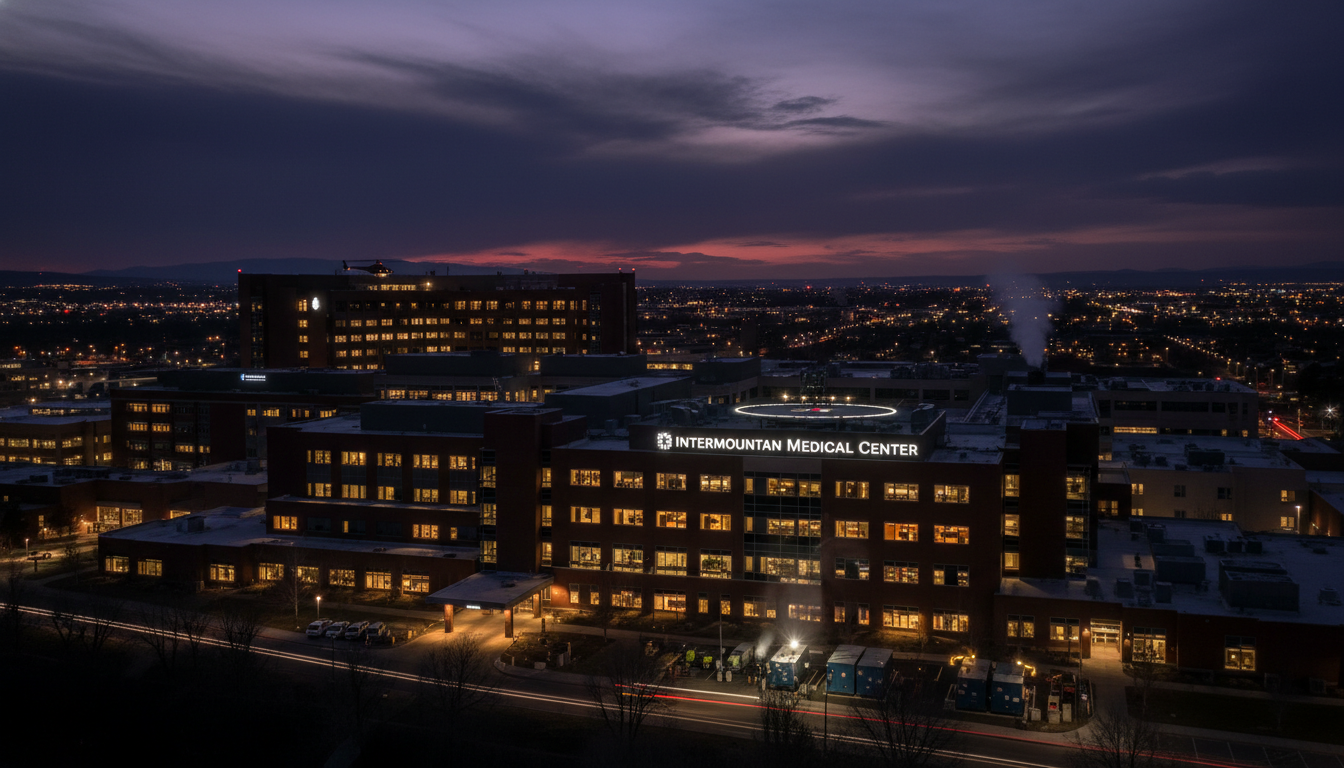
In the intricate, high-stakes ecosystem of modern healthcare, electricity is not merely a utility; it is the lifeblood of operations. From the rhythmic hum of ventilators to the precise calibration of surgical robots and the digital networks that house critical patient records, power drives every beat of a medical facility. When that flow is interrupted, the consequences can be immediate and severe.
While specific, large-scale incidents like a hypothetical or historical “Intermountain Medical Center power outage” serve as alarming case studies, they are part of a broader, critical conversation about infrastructure resilience in healthcare. Intermountain Medical Center, located in Murray, Utah, is a flagship facility known for its trauma care and advanced medical services. Like any major medical hub, it represents a complex web of systems where redundancy is key. This article explores the anatomy of hospital power failures, the specific challenges faced by trauma centers, and the future of energy resilience in medicine.
The Anatomy of a Hospital Power Outage
To understand the gravity of a power outage at a facility of Intermountain’s caliber, one must first understand what “losing power” actually means in a hospital setting. It is rarely a total blackout where the building goes silent. Instead, it is a chaotic transition of energy sources.
The Transfer Gap
Hospitals are equipped with massive backup generators, often powered by diesel or natural gas. When the municipal grid fails—whether due to a car hitting a utility pole, severe weather, or grid instability—switches are designed to detect the drop in voltage instantly. However, there is a “transfer gap.” This is the roughly 10-second delay between the grid failing and the generators reaching full capacity.
For a patient sitting in a waiting room, this might just mean the lights flicker and dim. For a surgeon in the middle of a delicate procedure, or a patient on life support, those 10 seconds are bridged by Uninterruptible Power Supply (UPS) battery systems. If these batteries fail, or if the switchgear malfunctions, that 10-second gap can turn into a critical failure event.
Prioritizing the Load
Once generators kick in, they don’t power everything. Hospitals operate on a tiered system of electrical priority:
- Life Safety Branch: Emergency lighting, exit signs, and fire alarm systems.
- Critical Branch: Operating rooms, Intensive Care Units (ICUs), and specialized equipment like ventilators.
- Equipment System: Major mechanical systems like HVAC and vacuum pumps.
Non-essential areas, often including cafeterias, administrative offices, and general hallway outlets, may remain dark to conserve fuel and load capacity.
The Operational Impact of an Outage at a Major Trauma Center
Intermountain Medical Center is a Level I Trauma Center. This designation means it handles the most severe cases in the region. A power outage here carries significantly higher risks than at a smaller clinic.
1. The Disruption of Critical Care
In the ICU and NICU (Neonatal Intensive Care Unit), machines breathe for patients and monitor their vital signs second by second. While these machines have internal batteries, a prolonged outage puts immense stress on nursing staff. If the central monitoring station goes down due to a network switch failure, nurses must revert to “old school” monitoring—physically walking from room to room to check vitals, drastically increasing the workload and the potential for human error.
2. Surgical Standoffs
Imagine a neurosurgery in progress when the grid fails. Even with backup power, there is often a moment of recalibration. Equipment may need to reboot. Lighting may change intensity. The sterile airflow systems (HVAC) are crucial for preventing infection. If the HVAC system is not on the priority power branch, the temperature and humidity in the OR can rise rapidly, compromising the sterile field and the safety of the patient.
3. The Digital Blackout
Modern healthcare is digital. Electronic Health Records (EHR) allow doctors to see a patient’s allergies, medication history, and lab results instantly. In a severe power outage that affects server rooms or cooling for data centers, access to the EHR can be lost.
Hospitals conduct “downtime drills” for this exact scenario, where staff switch to paper charting. However, for a facility the size of Intermountain Medical Center, the logistical nightmare of tracking hundreds of patients on paper during a crisis cannot be overstated. Lab results must be hand-delivered. Medication orders must be handwritten and double-checked manually, slowing down care delivery significantly.
Case Studies and “What Ifs”: The Intermountain Scenario
While specific minor outages happen occasionally at hospitals nationwide due to construction or weather, a major event at Intermountain Medical Center would trigger a massive regional response.
In past instances involving other major hospitals, we have seen the domino effect of power failure. For example, during Hurricane Sandy in New York, NYU Langone Medical Center lost both grid power and backup generator power due to flooding. The result was a heroic but desperate evacuation of patients down dark stairwells.
While Utah is not prone to hurricanes, it faces different threats:
- Seismic Activity: The Wasatch Front is earthquake country. A major seismic event could sever grid connections and simultaneously damage fuel lines for backup generators.
- Extreme Heat: As summers get hotter, the strain on the regional grid increases. “Brownouts” or rolling blackouts can force hospitals to rely on generators for extended periods, risking mechanical failure of the backup systems themselves.
- Construction Accidents: With constant expansion in the Salt Lake Valley, the accidental severing of main power lines by construction crews remains a persistent, low-tech threat.
If Intermountain Medical Center were to face a catastrophic, long-term power failure, the protocol would likely involve:
- Diverting Ambulances: Emergency Medical Services (EMS) would be directed to take new trauma patients to University of Utah Hospital or other nearby facilities, potentially overwhelming them.
- Shelter-in-Place vs. Evacuation: Critical patients who cannot be moved would be consolidated to areas where power is most stable. If the outage persisted and backup systems failed, a mass evacuation to other network hospitals would be initiated—a logistical feat involving fleets of ambulances and helicopters.
The Human Element: Staff Resilience
Technology aside, the true safeguard during a power outage is the hospital staff. During power disruptions, it is the nurses, respiratory therapists, and facilities managers who bridge the gap.
Facilities managers are the unsung heroes of these events. They are the ones sprinting to the physical plant to manually override transfer switches, monitoring fuel levels in diesel tanks, and coordinating with the local utility company (like Rocky Mountain Power).
Meanwhile, clinical staff must manage patient anxiety. The psychological impact of an outage on a hospitalized patient—who is already vulnerable—is significant. Darkness induces fear. The beeping of alarms (or the sudden silence of them) causes panic. Staff must maintain a calm demeanor while navigating a physically darker and operationally more difficult environment.
The Future of Power: Microgrids and Sustainability
The conversation around hospital power is shifting from “backup” to “independence.” The traditional model—grid power plus diesel generators—is being challenged by newer, cleaner, and more resilient technologies.
Microgrids
Forward-thinking institutions are moving toward microgrid technology. A microgrid allows a hospital to generate its own power (via solar, wind, or fuel cells) and store it on-site. While normally connected to the main grid, a microgrid can “island” itself during an outage, operating completely independently for extended periods.
For a facility like Intermountain Medical Center, investing in microgrid capabilities would mean that during a regional blackout, the hospital remains a fully functional island of light and safety, without relying solely on finite diesel supplies.
Decarbonization Pressures
The healthcare sector is a major contributor to carbon emissions. Diesel generators are effective but dirty. As health systems like Intermountain Healthcare commit to sustainability goals, the reliance on fossil-fuel backup power becomes a conflict of interest. This is driving the adoption of battery energy storage systems (BESS) and hydrogen fuel cells, which provide resilience without the pollution.
Protecting the Grid: A Shared Responsibility
Ultimately, the reliability of power at Intermountain Medical Center is not just an internal issue; it is a community issue. It requires close collaboration between the healthcare system and the utility provider.
Rocky Mountain Power and Intermountain Healthcare likely maintain “priority restoration” agreements. This means that in a widespread disaster, the circuits feeding the hospital are the very first to be repaired. Furthermore, dual-feed systems are standard—meaning electricity enters the hospital campus from two different substations. If one substation fails, the other can pick up the load.
However, the grid itself requires modernization. Aging infrastructure across the United States poses a risk to all critical facilities. Investments in “smart grid” technology, which can self-heal by automatically rerouting power around damaged lines, are essential for the safety of future patients.
Conclusion
The phrase “Intermountain Medical Center power outage” evokes immediate concern because we implicitly understand the fragility of the human body and its dependence on technology. Modern medicine is a miracle of electricity. We use energy to image the brain, to shock the heart back into rhythm, and to keep premature infants warm.
While backup generators and transfer switches are the mechanical answers to power loss, true resilience lies in preparation, redundancy, and the skill of the medical and facilities staff. As we move into an era of more extreme weather and aging infrastructure, the ability of major hospitals to keep the lights on—no matter what happens outside their walls—remains one of the most critical challenges in public health safety. It is a challenge that requires constant vigilance, investment, and innovation to ensure that when the world goes dark, the hospital remains a beacon of hope. Visit
