
Introduction
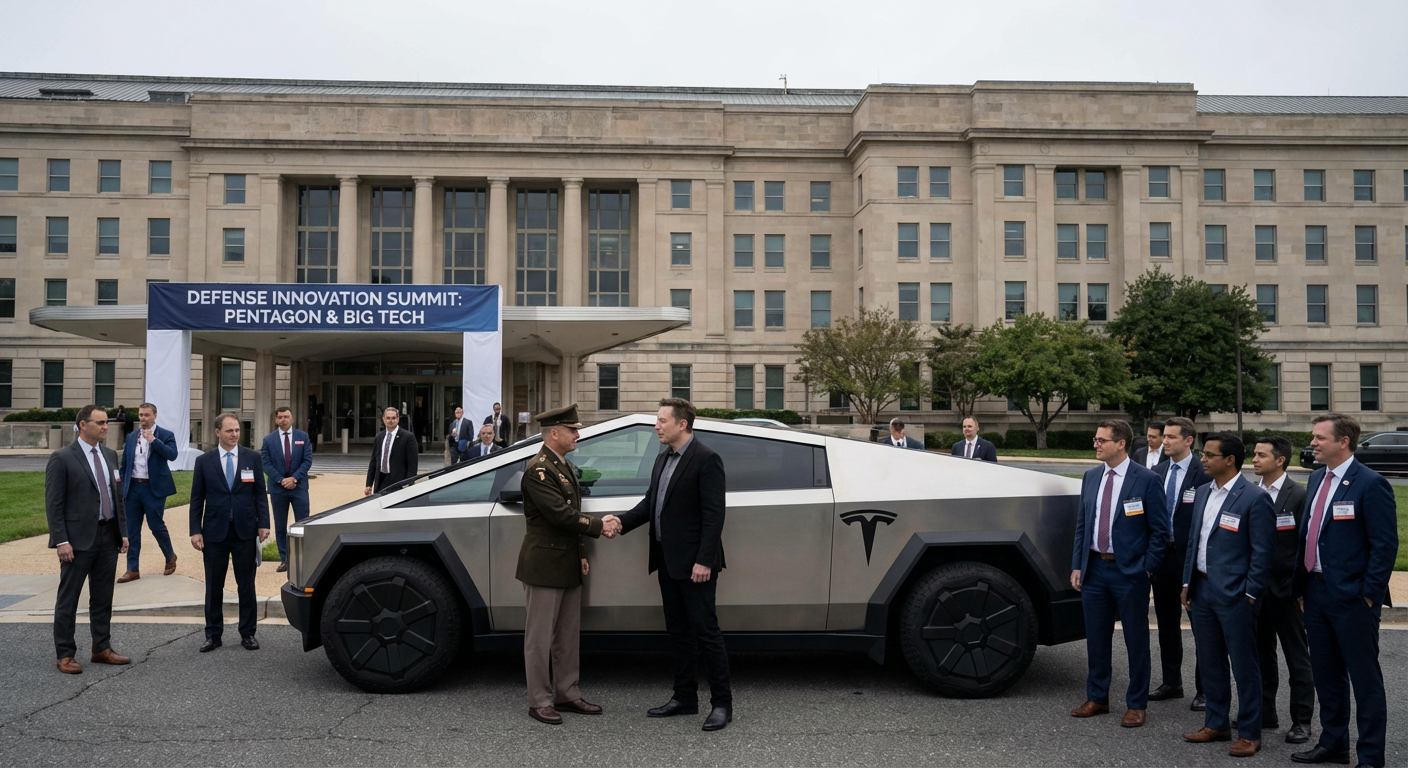
Since its unveiling, the Tesla Cybertruck has been described as many things: a brutalist masterpiece, a polarizing design experiment, and a glimpse into the future. But recently, a new narrative has emerged in technology and defense circles. With the Pentagon increasingly turning to Silicon Valley for innovation, speculation is mounting regarding a potential intersection between the Department of Defense (DoD) and Tesla’s steel-clad behemoth.
Is the Cybertruck merely a consumer status symbol, or could it serve a tactical purpose? As the lines between Big Tech and national defense blur, we break down the rumors, the capabilities, and the reality behind the “Pentagon vs. Cybertruck” conversation.
Pentagon and Big Tech Partnerships Explained
To understand why the Cybertruck is even part of the defense conversation, one must first understand the Pentagon’s evolving relationship with Big Tech.
For decades, the DoD relied on traditional defense contractors like Lockheed Martin and Raytheon. However, modern warfare is increasingly defined by software, AI, and rapid prototyping—areas where Silicon Valley excels.
The Pentagon has actively courted companies like Microsoft (for cloud computing via the JWCC contract), Google (for AI analysis), and Palantir (for data analytics). But the strongest link is undoubtedly Elon Musk himself. Through SpaceX, Musk has become a critical partner to the US government, providing satellite launches and the Starlink communication network.
The following table highlights how major tech players, including potentially Tesla, fit into the modern defense landscape:
Big Tech in Defense: The New Battlefield
| Tech Giant | Area of Defense Contribution | Potential Connection to Tesla |
|---|---|---|
| SpaceX (Elon Musk) | Satellite Communication (Starlink), Rocket Launches | Shared CEO; Starlink integration into vehicles. |
| Microsoft | Cloud Computing (JEDI/JWCC), HoloLens Headsets | Software integration for tactical dashboards. |
| Palantir | AI Data Analysis, Battlefield Intelligence | AI-driven autonomous driving software. |
| Tesla | Potential: EV Fleets, Battery Storage (Megapack) | Providing the hardware (Cybertruck) & energy. |
The precedent is set: The Pentagon is willing to adopt commercial technology if it provides a strategic edge.
Tesla Cybertruck Overview
Before assessing its military viability, we must look at what the Cybertruck actually is. It is a radical departure from traditional automotive engineering. Unlike standard trucks that use a body-on-frame design, the Cybertruck features a monochromatic exoskeleton made from Ultra-Hard 30X Cold-Rolled stainless steel.
Its angular, low-radar-signature look draws comparisons to the F-117 Nighthawk stealth fighter, earning it immediate attention from military enthusiasts. But beyond the looks, the raw numbers tell a compelling story for utility use.
Cybertruck Specs vs. Military Needs
| Feature | Specification | Military Relevance |
|---|---|---|
| Exoskeleton Material | Ultra-Hard 30X Cold-Rolled Stainless Steel | High durability, dent/scratch resistance, basic ballistic protection. |
| 0-60 MPH | 2.6 Seconds (Cyberbeast) | Rapid extraction capabilities; high-speed pursuit. |
| Towing Capacity | 11,000 lbs | Capable of hauling heavy equipment, artillery, or supplies. |
| Range | ~340 miles (est.) | Sufficient for short-range patrols and base operations. |
| Payload | 2,500 lbs | Can carry squad gear, ammunition, and heavy weaponry. |
Why Cybertruck is Linked to Defense Conversations
Why are analysts and enthusiasts linking a consumer EV to the battlefield? The speculation is driven by specific capabilities that align with modern military needs.
1. Durability and Protection
The Cybertruck’s steel skin is famously tough. While not “bulletproof” against military-grade high-caliber rifles, it is rated to withstand 9mm rounds. This offers a baseline of protection for non-combat utility roles that standard unarmored vehicles (like a Ford F-150) cannot match.
2. Silent Operations
Stealth is paramount in reconnaissance. Internal combustion engines are loud and produce significant heat signatures. An electric tactical vehicle allows for silent approach and idle, a massive tactical advantage for special operations.
3. Mobile Power Station
The modern soldier is burdened with electronics—drones, radios, and night vision. The Cybertruck’s “Powershare” technology effectively turns the vehicle into a mobile generator, capable of powering a command post without the noise of a diesel generator.
Here is how the Cybertruck stacks up against the traditional vehicles currently used by the military:
Tactical Comparison: Electric vs. Combustion
| Comparison Factor | Tesla Cybertruck (EV) | Traditional Tactical Vehicle (ICE) |
|---|---|---|
| Noise Signature | Silent (Stealth advantage) | Loud (Diesel engine noise) |
| Heat Signature | Low (Harder to detect via thermal) | High (Engine heat is easily tracked) |
| Fuel Source | Electricity (Solar/Grid) | Diesel/JP-8 Fuel |
| Maintenance | Low (Fewer moving parts) | High (Complex engine/transmission) |
| On-Board Power | Yes (Can power base camps/drones) | No (Requires separate generator) |
Expert Opinions
What do defense and automotive experts say about a militarized Tesla?
- The Skeptics: Logistics experts point out the “charging problem.” In a combat zone, finding a Supercharger is impossible. Relying on solar is slow, and hauling diesel generators to charge EVs defeats the purpose. They argue that until solid-state batteries or mobile nuclear charging exists, EVs are limited to base operations.
- The Optimists: Tech analysts argue that the Cybertruck is a perfect candidate for a “Light Reconnaissance Vehicle” (LRV). They suggest the Pentagon wouldn’t use it for frontline tank battles, but rather for base security, border patrol, or special ops insertion where speed and silence are key.
- The Modification Argument: Experts agree that a “stock” Cybertruck wouldn’t be deployed. However, a modified version—stripped of luxury interiors and up-armored—could be a cost-effective alternative to developing a new military vehicle from scratch.
Market Impact on Tesla
The mere speculation of a Pentagon contract is a powerful driver for Tesla’s stock (TSLA).
- Validation of Toughness: If the military were to test the Cybertruck, it would serve as the ultimate marketing validation of the vehicle’s durability, silencing critics who call it a “toy.”
- Revenue Diversification: A government contract would open a steady, recession-proof revenue stream for Tesla, similar to how Starshield (a version of Starlink) serves the government.
- Brand Perception: Associating Tesla with national security strengthens the brand’s image as a serious American manufacturing powerhouse, moving it beyond just a “luxury car maker.”
FAQs
1. Is the Pentagon currently buying Cybertrucks?
As of now, there is no public contract confirming the Pentagon is purchasing Cybertrucks for combat use. However, the military frequently tests commercial vehicles for potential adaptation.
2. Is the Cybertruck actually bulletproof?
The stainless steel body is resistant to handgun fire (like 9mm rounds), but the standard glass and body would not withstand military-grade assault rifle fire or explosives without aftermarket up-armoring.
3. Does the US Military use electric vehicles?
Yes. The Army is actively pursuing an electric strategy. GM Defense, for example, has already built an electric Infantry Squad Vehicle (ISV) for testing. The transition to electric is a stated goal for the DoD’s future fleet.
Final Thoughts
While the image of a platoon of Cybertrucks charging across a desert remains, for now, a scene from a sci-fi movie, the speculation is grounded in reality. The Pentagon needs innovation, and Tesla offers a platform that is durable, fast, and electric.
Whether or not the Cybertruck ever wears a camouflage paint job, the conversation highlights a shifting tide: the future of defense technology lies not just in traditional armories, but in the disruptive tech hubs of Silicon Valley. For Tesla, even being part of the conversation is a victory.
